Day Dream Font: Unlocking Vibrant, Multi-Format Typography for Modern Projects
There is a specific moment in the design process where a project shifts from a collection of elements into a cohesive story. Usually, that moment happens when you find the right typeface. If you have ever scrolled through hundreds of generic sans-serifs looking for something that feels alive, textured, and emotionally resonant, you know the struggle. Typography sets the emotional temperature of your work. It dictates whether a brand feels corporate and cold or whimsical and inviting. For designers, crafters, and entrepreneurs who need their text to do more than just "sit there," finding a typeface with personality is non-negotiable. This is where the Day Dream font family steps in, offering a unique blend of artistic flair and technical versatility that caters to both digital precision and physical crafting.
The Anatomy of a Dreamy Typeface
What makes a font like Day Dream stand out in a saturated market of premium fonts? It comes down to visual energy. Unlike rigid, geometric typefaces that demand attention through sheer boldness, Day Dream captures attention through movement. It possesses a quality that designers often describe as "organic flow." The letterforms likely feature varying baselines and playful swashes, mimicking the natural inconsistency of hand-lettering. This makes it an ideal candidate for projects that require a human touch without sacrificing the scalability of vector graphics.
Visually, this typeface sits in that sweet spot between a script font and a display font. It isn't just a standard cursive; it carries enough weight to be legible at larger sizes, which is critical for headers and logos. The aesthetic suggests a modern, artistic vibe—perfect for the "boho," artistic, or lifestyle branding sectors that are currently dominating social media trends. It feels less like text written by a machine and more like art drawn by a hand.
Technical Versatility: The Best of Both Worlds
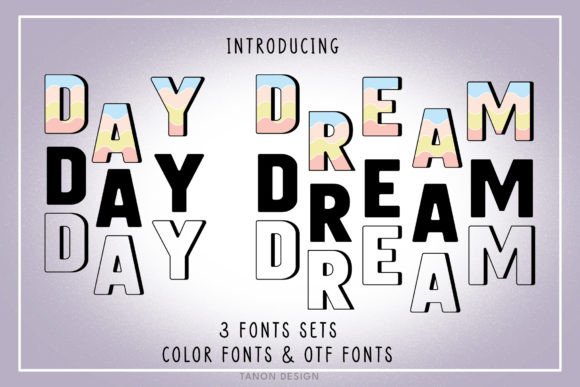
One of the most frustrating aspects of working with decorative fonts is compatibility. You find the perfect design asset, download it, and realize it doesn't work with your cutting machine software. The Day Dream font set solves this logistical headache by providing a comprehensive package: 1 Color font and 2 OTF fonts.
This structure is incredibly practical for the modern creative who works across multiple platforms. Here is how you can leverage this specific configuration:
- The OTF/TTF Versions: These are your workhorses. The OpenType files provide the clean, scalable vectors needed for professional logo design, web design, and standard print layout. Because they are standard vector outlines, you can edit the kerning, change the color to anything you want in Adobe Illustrator or InDesign, and ensure maximum readability against complex backgrounds.
- The Color Version: This is the showstopper. Color fonts contain bitmap data within the font file itself, allowing for textures, gradients, and multi-colored layers within a single glyph. This is a massive time-saver for social media graphics and digital products where you want that hand-painted or textured look without manually adding effects in Photoshop.
Practical Applications: From Screen to Physical Product
The true value of a creative font lies in its utility. How does Day Dream perform in the real world? The answer is: surprisingly adaptably, provided you match it to the right context.
Branding and Identity
If you are building a brand identity for a boutique, a bakery, a wellness coach, or a creative agency, this font sets an immediate tone. It suggests creativity, openness, and approachability. However, as with any display font, legibility is key. Use Day Dream for the primary logo mark or the header of your website, but pair it with a clean, geometric sans serif font for body copy. This contrast creates a professional hierarchy that guides the viewer's eye naturally.
Merchandise and Print-on-Demand
For small business owners selling on Etsy or running their own Shopify stores, typography drives sales. Imagine Day Dream emblazoned across a tote bag, a coffee mug, or a t-shirt. The font's artistic nature implies that the product is "designed," not just printed. It adds perceived value to packaging design and merchandise. The "Dreamy" aesthetic works particularly well for lifestyle products, stationery, and apparel aimed at a younger, style-conscious demographic.
Crafting and Cricut Compatibility
This is a crucial technical distinction. The black version of the Day Dream font is fully compatible with Cricut Design Space and other cutting machines. This means you can use it for vinyl decals, iron-on transfers, and intricate paper crafts. However, crafters need to pay attention to the file format when using the color version. While the color font looks stunning, the technology behind color fonts (SVG format) is not yet fully supported by standard cutting machine software for cutting purposes. Therefore, for physical cutting projects, stick to the standard black OTF version. For print-then-cut projects or digital stickers, the color version can be utilized in compatible software like Silhouette Studio or Adobe Illustrator.
Mastering Font Pairings for Maximum Impact
A font rarely works in complete isolation. The art of font pairing is what separates amateur layouts from professional presentation. Because Day Dream has a strong personality—likely featuring high contrast or decorative swashes—it needs a grounding partner.
Consider these pairing strategies:
- Playful yet Professional: Pair Day Dream with a rounded sans serif font. The geometric simplicity of the sans-serif will balance the organic curves of Day Dream, making the layout feel friendly but structured. This is excellent for blog headers and invitations.
- High Contrast Editorial: Combine Day Dream with a classic, high-contrast serif font. The traditional structure of the serif provides a sophisticated backdrop for the handwritten style of Day Dream. This works beautifully for editorial layouts, magazine covers, or high-end packaging design.
- Monochromatic Harmony: If Day Dream includes a standard and a bold version, try using the bold for main keywords and the regular for sub-headers, all within the same color palette. This maintains the "dreamy" vibe throughout the entire marketing asset without introducing visual noise.
Optimizing for Digital Environments
In the realm of web design and social media, performance and aesthetics must coexist. When using Day Dream for a website hero section, ensure the font size is large enough to retain the detail of the letterforms. Script and display fonts often lose their charm when scaled down to 14px for mobile navigation. Use it for H1 and H2 tags to establish visual consistency and brand recognition.
For content creators on Instagram or Pinterest, the color font version is a game-changer. It allows you to create "stop-the-scroll" graphics instantly. Instead of spending 20 minutes layering textures over text in Photoshop, you can simply type out your quote in the color font, and the texture is baked right in. This speed is essential for maintaining a consistent posting schedule.
Commercial Considerations and Licensing
Before integrating any premium font into a client's brand or your own commercial product line, licensing is paramount. Most professional font packages come with specific terms regarding how many computers can install the font and whether it can be used for physical products for sale. Always review the license agreement included with the Day Dream set. If you are a print-on-demand business selling thousands of t-shirts, you need to ensure your license covers "server embedding" or "unlimited commercial use," depending on the foundry's terms.
Furthermore, regarding the color font compatibility: Always test your workflow before committing to a final design. As noted, the color version works in Photoshop, Illustrator, Silhouette, and Inkscape. If your workflow relies heavily on software that does not support OpenType-SVG (the technology behind color fonts), you will need to rely on the standard OTF versions and apply your own colors and textures. This is standard practice in modern typography, but it's good to know your tools before you start.
Final Thoughts on Elevating Your Visuals
Choosing a typeface like Day Dream is about more than just picking a pretty font; it is about choosing a voice for your project. It is about deciding that your brand or design should feel imaginative, artistic, and distinct. Whether you are a hobbyist making greeting cards for friends, a small business owner branding a new product line, or a designer crafting a social media campaign, this font set provides the tools to bridge the gap between digital design and physical creation. By leveraging the OTF files for your scalable vector work and the color font for your digital displays, you ensure that your typography is not just seen, but felt.